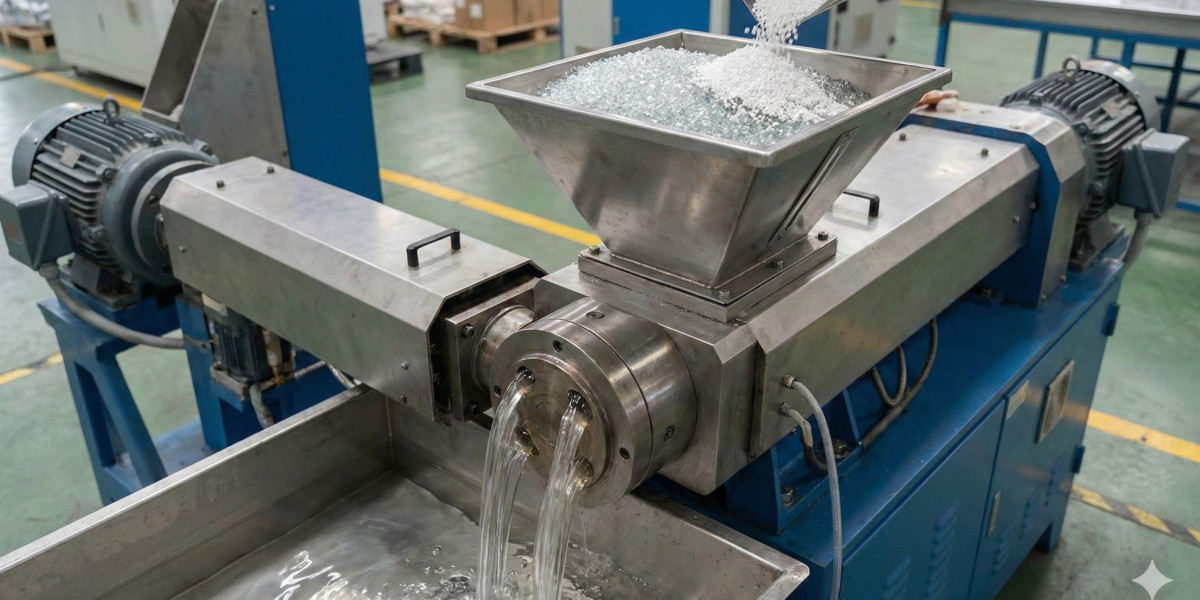

In the current era of manufacturing, the distinction between "commodity" and "specialty" plastics is blurring as high-performance compounding techniques are applied to widely available resins like Polyethylene Terephthalate (PET). The global movement toward a circular economy has placed immense pressure on manufacturers to reduce their reliance on virgin petrochemicals, but this must be done without compromising the safety or longevity of the final product. Compounding acts as the vital technological bridge in this scenario, enabling the transformation of recycled PET (rPET) into high-value compounds that meet the same stringent performance criteria as their virgin counterparts.
The primary challenge in utilizing recycled PET for engineering applications has always been the degradation of its physical properties during each heat cycle. However, 2026 has seen the widespread adoption of advanced chain extenders and nucleating agents that effectively "re-engineer" the polymer at a molecular level during the compounding process. This allows for the production of rPET compounds with exceptional impact resistance and dimensional stability, making them suitable for everything from industrial-grade power tool housings to durable consumer electronics. By upcycling waste into high-performance materials, the industry is significantly lowering the environmental cost of modern technology.
According to a recent report by Market Research Future, the Polyethylene Terephthalate Compounding Market is expanding rapidly in regions like Europe and North America, where "Design for Recyclability" mandates are becoming law. This regulatory tailwind is encouraging companies to move away from multi-material laminates that are difficult to process at end-of-life. Instead, firms are looking at the Polyethylene Terephthalate Film Market Size to determine how compounded mono-PET structures can replace traditional multi-layer films in food and medical packaging. The shift toward mono-materiality is essential for creating high-purity recycling streams that can feed back into the compounding loop.
The future of the market will be defined by the ability to achieve "virgin-equivalent" performance with ever-increasing percentages of post-consumer content. This requires not only better sorting and cleaning technologies but also more sophisticated compounding additives that can neutralize impurities and odors within the recycled resin. As chemical recycling pilots begin to scale up, providing high-purity monomers for repolymerization, the compounding industry will have access to an even higher grade of sustainable feedstock. This will allow for the creation of ultra-clean PET compounds for sensitive medical devices and food-contact applications, further solidifying PET's position as the world's most versatile and sustainable engineering plastic.