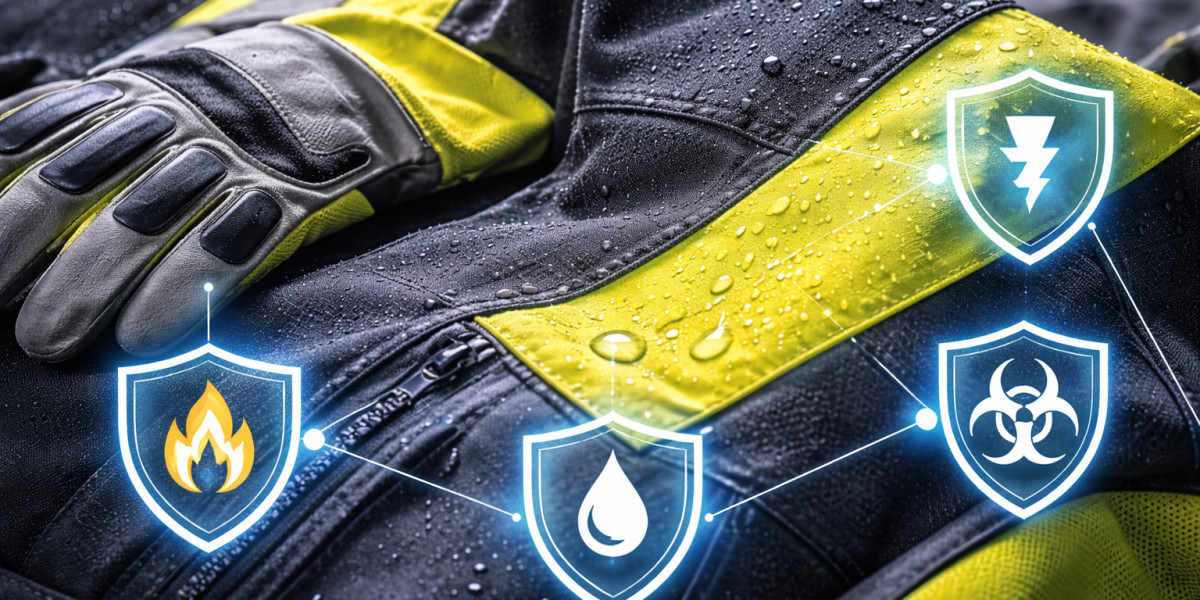

Rapid technological progress is transforming how protective textiles are designed, produced, and applied across industries. Innovations in material science and textile engineering are enabling higher levels of protection without sacrificing comfort or efficiency.
The Personal Protective Textile Market is benefiting from advancements that improve both functional performance and user experience. Modern protective textiles are engineered to offer multi-hazard protection, addressing thermal, chemical, biological, and mechanical risks simultaneously.
Nanotechnology has emerged as a key contributor to performance enhancement. Nano-coatings improve resistance to liquids, chemicals, and microbes while maintaining breathability. These coatings extend garment lifespan and reduce maintenance requirements, increasing cost-effectiveness for end users.
Smart textile technologies are also gaining attention. Embedded sensors can monitor temperature, moisture, and exposure levels in real time, providing valuable data for safety management systems. Although adoption is still emerging, these innovations represent the future of proactive workplace safety.
Lightweight composite fabrics are replacing heavier traditional materials. Advanced fiber blends provide superior strength-to-weight ratios, reducing wearer fatigue during extended use. This improvement is particularly valuable in construction, mining, and emergency response operations.
Manufacturing automation supports consistent quality and scalability. Digital weaving, precision coating, and automated inspection systems enable large-scale production of high-performance textiles with minimal variation. This consistency is critical for meeting industry certification standards.
Customization capabilities further enhance market appeal. Manufacturers can tailor protective textiles to specific industry needs, such as flame-resistant clothing for energy workers or anti-static garments for electronics manufacturing. This flexibility drives adoption across diverse applications.
According to a recent report by Market Research Future, the Personal Protective Textile Market is increasingly influenced by technological innovation aimed at improving performance and durability. Supporting analysis from Textile Fabrics Market Size highlights how advanced textile technologies contribute to overall market expansion.
As innovation continues to redefine protection standards, technological advancement will remain central to competitive differentiation. The market’s future lies in delivering smarter, lighter, and more effective protective solutions.