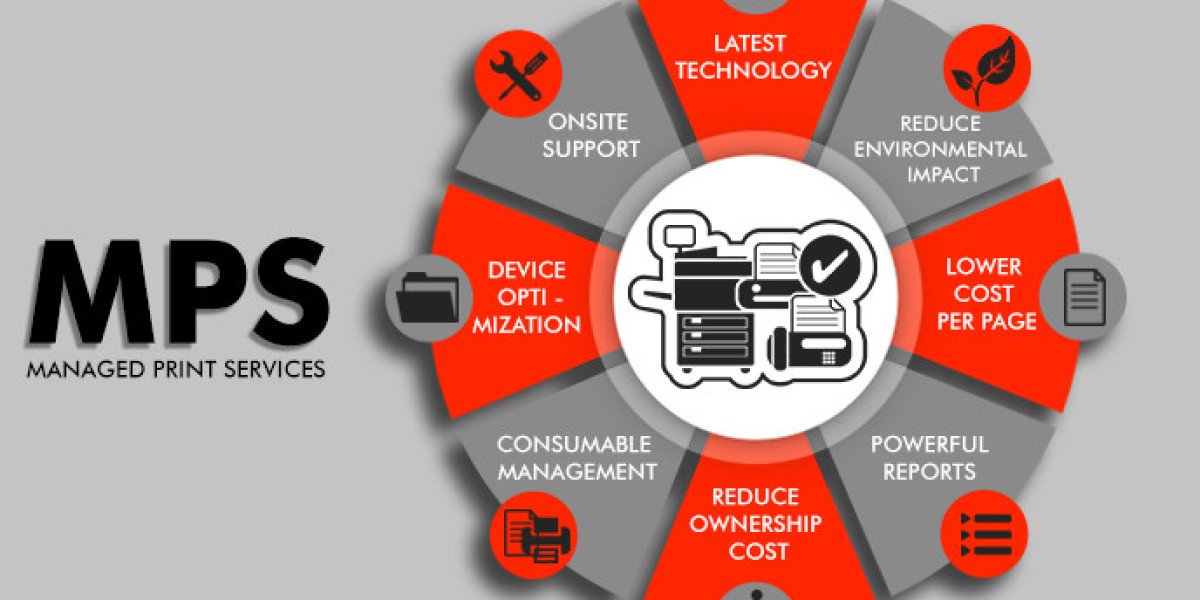

A thorough investigation of the managed services sector reveals a dynamic and evolving competitive environment. A detailed Managed Print Services Market Analysis uncovers the intricate interplay between technological innovation, customer demands, and strategic business drivers. This analysis employs rigorous methodologies, including SWOT (Strengths, Weaknesses, Opportunities, Threats) and Porter's Five Forces, to provide a holistic view of the market's structure and future trajectory. Strengths of the market include the clear return on investment through cost savings and the ability to enhance document security. Weaknesses can involve the initial complexity of transitioning from an unmanaged to a managed environment and potential employee resistance to new printing rules. Opportunities are abundant, particularly in the integration of digital workflow services and expansion into emerging markets, while the primary threat remains the long-term trend toward paperless office environments.
A value chain analysis of the managed print services market highlights the key activities that create value for the end customer. This chain begins with the hardware manufacturers (OEMs) who produce the printers and multifunction devices. The next link involves the MPS providers, which can be the OEMs themselves, independent resellers, or IT service companies. These providers conduct the initial assessment, design the solution, and manage the ongoing service delivery. Key components of their service include fleet deployment, proactive monitoring, automated supplies replenishment, break-fix maintenance, and help-desk support. The final stage of the value chain is the end-user organization, which receives the benefits of a cost-effective, secure, and efficient print environment. The Managed Print Services Market is Set to Grow from USD 58.3 Billion to 140.57 Billion by 2035, Reaching at a CAGR of 9.2% During the Forecast Period 2025 - 2035.
Porter's Five Forces analysis provides further clarity on the competitive intensity within the MPS industry. The threat of new entrants is moderate, as establishing a global service delivery network and sophisticated management platforms requires significant capital investment and expertise. The bargaining power of buyers is relatively high, as organizations can choose from a wide range of providers, including major OEMs and independent specialists, fostering a competitive pricing environment. The bargaining power of suppliers, primarily hardware manufacturers, is also moderate, as providers often have relationships with multiple OEMs. The threat of substitute products or services is a significant long-term consideration, driven by the rise of digital collaboration tools and document management systems that reduce the need for physical printing. Finally, the rivalry among existing competitors is intense, with major players constantly innovating and expanding their service portfolios to capture market share.
PESTLE analysis examines the broader macro-environmental factors influencing the managed print services market. Politically, government regulations around data security (like GDPR) and environmental standards drive demand for secure and sustainable MPS solutions. Economically, in times of uncertainty, the cost-saving aspect of MPS becomes highly attractive to businesses looking to control operational expenditures. Socially, the shift to hybrid work models and increasing environmental awareness among employees and consumers alike supports the adoption of flexible and eco-friendly printing solutions. Technologically, advancements in cloud computing, AI, and IoT are enabling more sophisticated, predictive, and automated service delivery. Legally, contract law and service-level agreements are critical in defining the relationship between providers and clients. Environmentally, corporate sustainability goals are a major catalyst for adopting MPS to reduce paper waste and energy consumption.
Explore Our Latest Trending Reports:
Consumer Integrated Circuit Market Size
Consumer Technical Support Service Market Size
Computer Peripherals Purpose Logic Ic Market Size