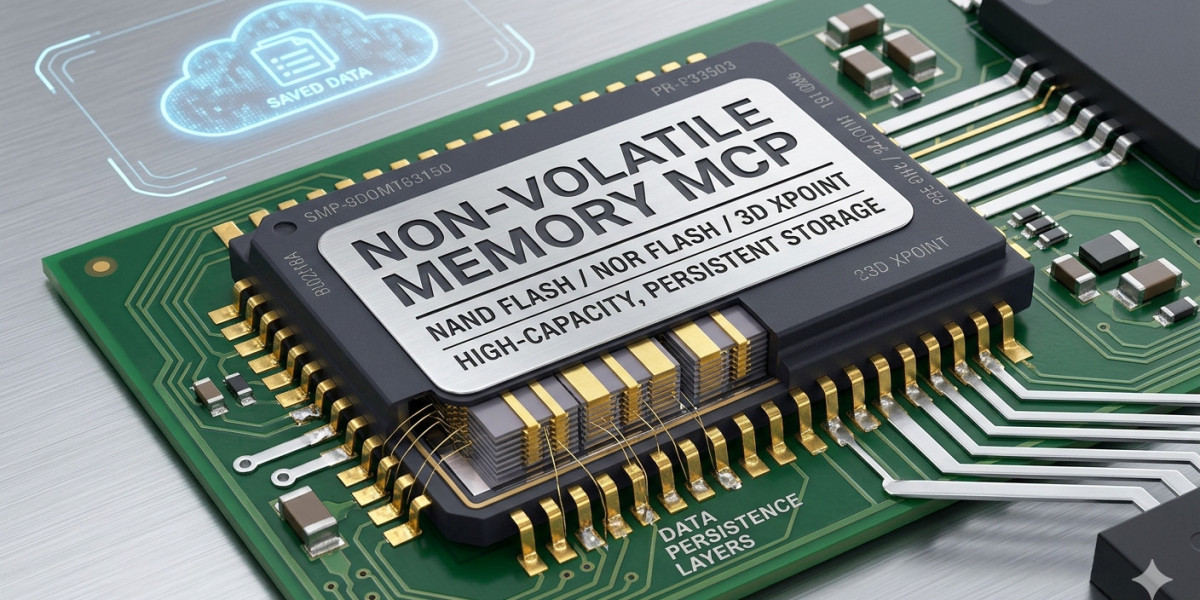

The Non-Volatile Memory Market Size is expanding rapidly as the global demand for reliable and long-term data storage solutions continues to surge. Non-volatile memory retains information even when power is turned off, making it a critical component in modern electronics, enterprise storage systems, and emerging technologies. As digital transformation accelerates across industries, the market is witnessing substantial growth fueled by advancements in memory technologies and increasing data generation.
Market Overview and Key Growth Drivers
The growing reliance on flash memory in consumer electronics such as smartphones, laptops, and wearable devices is a major factor driving the market. These storage solutions offer faster access speeds and enhanced durability compared to traditional storage systems. Persistent storage solutions are increasingly being adopted in data centers and cloud infrastructure, supporting the rising need for efficient data management.
Another significant contributor is the widespread use of EEPROM device technologies in automotive electronics, industrial automation, and medical equipment. These devices ensure secure and stable data storage, particularly in mission-critical applications. The increasing focus on data retention memory across industries further emphasizes the importance of non-volatile solutions.
Technological Advancements Shaping the Market
Innovation remains at the core of the non-volatile memory industry. Emerging technologies such as non volatile ram memory (NVRAM) and advanced 3D NAND architectures are redefining storage capabilities. These technologies provide higher density, lower power consumption, and faster processing speeds.
Additionally, ongoing developments in examples of non volatile memory, including MRAM, FRAM, and ReRAM, are opening new possibilities for high-performance computing and IoT applications. As flash memory market trends evolve, flash memory producers and flash memory suppliers are focusing on enhancing scalability and cost efficiency to meet growing global demand.
Expanding Applications Across Industries
The applications of non volatile memory devices are vast and continuously expanding. In the consumer electronics sector, they are essential for storing operating systems, applications, and user data. In enterprise environments, they support high-speed data processing and analytics.
The automotive industry is also embracing non-volatile memory for advanced driver assistance systems (ADAS), infotainment systems, and vehicle control units. Similarly, the healthcare sector relies on these technologies for storing patient records and powering medical devices.
As the memory industry evolves, memory companies are investing heavily in research and development to maintain competitive advantage and address emerging technological needs.
Market Synergies and Related Industry Growth
The growth of the non-volatile memory market is closely linked with advancements in financial and investment ecosystems. For instance, the Financial Protection Market is benefiting from secure data storage solutions that ensure the safety and integrity of sensitive financial information.
Similarly, the Canada Investment Banking Market is experiencing increased reliance on advanced data storage technologies to support complex financial operations, analytics, and digital transformation initiatives.
Regional Insights and Market Trends
North America leads the market due to strong technological infrastructure and early adoption of advanced storage solutions. Asia-Pacific is emerging as a key growth region, driven by the presence of major manufacturing hubs and increasing demand for consumer electronics.
Europe is also witnessing steady growth, particularly in automotive and industrial applications. The expansion of cloud computing and big data analytics across regions continues to create new opportunities for the non-volatile memory market.
Future Outlook
The future of the non-volatile memory market looks promising, with continuous innovation and growing demand across sectors. As data becomes an increasingly valuable asset, the need for reliable and efficient storage solutions will continue to rise. Advancements in memory technologies, combined with expanding applications, will drive sustained market growth in the coming years.
FAQs
1. What is non-volatile memory and why is it important?
Non-volatile memory is a type of storage that retains data even when power is turned off. It is crucial for devices that require long-term data storage and reliability.
2. What are common examples of non-volatile memory?
Common examples include flash memory, EEPROM, MRAM, and ROM, all of which are widely used in consumer electronics and industrial applications.
3. Which industries use non-volatile memory the most?
Industries such as consumer electronics, automotive, healthcare, IT, and finance heavily rely on non-volatile memory for data storage and processing.
Access Customized Regional And Country Reports: