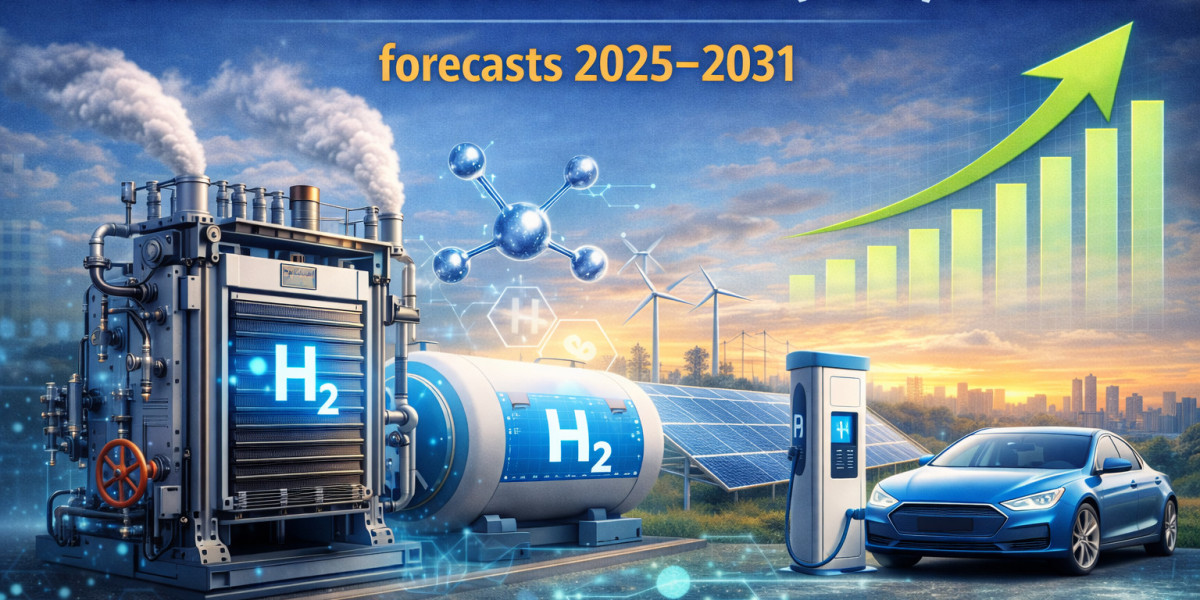

The Global Protonic Ceramic Fuel Cell (PCFC) Market is witnessing significant growth due to the increasing global focus on clean energy technologies, decarbonization initiatives, and the rapid development of hydrogen-based power generation solutions. Protonic ceramic fuel cells represent an advanced type of solid oxide fuel cell that operates at intermediate temperatures (around 500°C–700°C) and offers improved fuel flexibility, efficiency, and durability compared to traditional fuel cells. These advantages make PCFC technology highly attractive for stationary power generation, transportation systems, and portable energy applications.
The market is expected to experience remarkable expansion over the next decade as industries and governments seek sustainable alternatives to fossil fuels. The growing integration of hydrogen energy systems, along with increasing investments in fuel cell research and development, is driving the commercialization of PCFC technology worldwide. Additionally, rising concerns regarding greenhouse gas emissions and climate change have accelerated the adoption of low-emission energy technologies, which further contributes to the demand for protonic ceramic fuel cells.
Download Sample PDF: https://www.theinsightpartners.com/sample/TIPRE00029422
PCFC technology is gaining momentum because it can efficiently convert chemical energy into electricity with very low emissions. Compared with conventional fuel cells, PCFCs operate at lower temperatures while maintaining high efficiency, which reduces material degradation and operational costs. Their capability to utilize multiple fuels, including hydrogen, ammonia, and natural gas, further strengthens their position as a promising energy technology for future clean power systems.
Market Drivers
Growing Demand for Clean and Sustainable Energy
One of the primary drivers of the Protonic Ceramic Fuel Cell (PCFC) market is the increasing demand for clean and sustainable energy worldwide. Governments, industries, and environmental organizations are actively promoting technologies that reduce carbon emissions and support climate goals. Fuel cell technologies, including PCFCs, produce electricity through electrochemical reactions rather than combustion, which significantly reduces greenhouse gas emissions and improves air quality.
In addition, global initiatives aimed at achieving carbon neutrality are encouraging the development and deployment of hydrogen-based energy solutions. Many countries are investing heavily in hydrogen production and fuel cell infrastructure, which creates favorable conditions for the growth of the PCFC market.
Technological Advancements in Fuel Cell Materials
Continuous technological advancements in fuel cell materials and ceramic electrolytes are also driving the growth of the Protonic Ceramic Fuel Cell market. Researchers and manufacturers are focusing on improving proton conductivity, enhancing fuel efficiency, and increasing the durability of fuel cell systems.
Advanced ceramic materials allow PCFCs to operate at intermediate temperatures, which reduces thermal stress on system components and improves overall performance. These innovations are helping manufacturers develop more reliable and cost-effective fuel cell systems, making PCFC technology more attractive for commercial and industrial applications.
Rising Investments in Hydrogen Infrastructure
The rapid expansion of hydrogen infrastructure across multiple regions is another significant factor contributing to the growth of the PCFC market. Governments and private organizations are investing in hydrogen production facilities, storage systems, and distribution networks to support the global transition toward clean energy.
As hydrogen becomes a key component of future energy strategies, PCFC technology is expected to play a crucial role in efficient energy conversion and decentralized power generation. The compatibility of PCFCs with hydrogen-based fuels makes them an important technology in the evolving hydrogen economy.
Increasing Applications in Stationary and Portable Power
Protonic ceramic fuel cells are increasingly used in stationary power generation, backup power systems, and portable power devices. Their high efficiency and ability to operate with various fuels make them suitable for distributed energy systems and off-grid applications.
Stationary applications represent a major segment of the PCFC market, as industries and utilities seek reliable and environmentally friendly power generation solutions. Additionally, portable fuel cell systems are gaining popularity in sectors such as defense, emergency response, and remote operations, further boosting market growth.
Government Support and Clean Energy Policies
Government policies and financial incentives promoting renewable energy technologies are playing a vital role in expanding the Protonic Ceramic Fuel Cell market. Many countries have introduced funding programs, tax incentives, and research grants to encourage the development of fuel cell technologies.
These supportive policies are helping accelerate the commercialization of PCFC systems and encouraging collaboration between research institutions, energy companies, and technology providers.
Key Market Segments
The Protonic Ceramic Fuel Cell (PCFC) market is segmented based on type, application, and geography.
By Type
Proton Exchange Membrane Fuel Cells (PEMFC)
Alkaline Fuel Cells (AFC)
Molten Carbonate Fuel Cells (MCFC)
Solid Oxide Fuel Cells (SOFC)
Direct Methanol Fuel Cells (DMFC)
Phosphoric Acid Fuel Cells (PAFC)
By Application
Transport
Stationary
Portable
These segments allow manufacturers to develop specialized solutions tailored to different energy requirements across industries.
Regional Insights
The Asia-Pacific region is expected to dominate the Protonic Ceramic Fuel Cell market due to strong government support for clean energy technologies and hydrogen infrastructure development. Countries such as Japan, China, and South Korea are actively investing in fuel cell research and commercialization to achieve long-term sustainability goals.
North America and Europe are also experiencing increasing adoption of fuel cell technologies due to advancements in renewable energy systems, strong environmental regulations, and the presence of major fuel cell manufacturers.
Key Market Players
Some of the major companies operating in the global Protonic Ceramic Fuel Cell (PCFC) market include:
- Plug Power Inc.
- FuelCell Energy
- Hydrogenics
- Shanghai Pearl Hydrogen Energy Technology Co., Ltd.
- Nedstack
- Ballard Power Systems
- Sunrise Power Solutions
These companies are focusing on research and development, strategic partnerships, and technological innovations to strengthen their position in the global PCFC market.
About Us
The Insight Partners is a one-stop industry research provider of actionable intelligence. The company helps clients obtain solutions to their research requirements through syndicated and consulting research services. The firm specializes in industries such as semiconductor and electronics, aerospace and defense, automotive and transportation, healthcare, manufacturing, chemicals, and energy. With a team of experienced analysts and researchers, The Insight Partners provides data-driven insights that help organizations make informed business decisions.
Contact Us
If you have any queries about this report or would like further information, please contact:
The Insight Partners
Email: sales@theinsightpartners.com
Phone: +1-646-491-9876
Website: https://www.theinsightpartners.com